Niv Khurana

Project Goals
-
Development of narrative skills
-
Developing an efficient workflow with a new team
-
Building experience with horror genre writing
-
Development of writing and narrative design skills
-
Time management skills and multitasking ability between projects
Research & Planning
Narrative Design
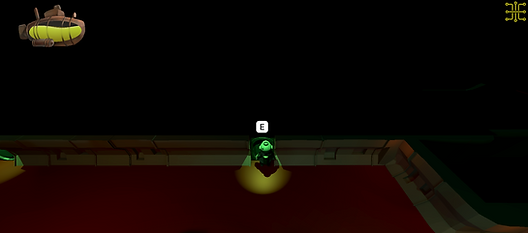
The theme of this jam was Trust No One. Most of the team was familiar with each other already, with me being a remote contributor, so I aimed to focus on narrative design above all other aspects. There were two themes being developed for this game, eldritch horror and manipulative AI. The concept was for a horror game where players must maintain a failing submarine while it slowly transforms into a horrifying creature, all the while avoiding an AI that lies to them.
After reading the concepts and plans made by the other designers, I pitched the progression style and storyline. The AI concept was reduced significantly, as I felt that balancing two concepts for the game would require more time and a better workflow than we were equipped to handle at the time. By allowing focus on the eldritch horror and tying the main character's arc to that, we were able to develop a clearer vision for the puzzles and a stronger narrative overall.
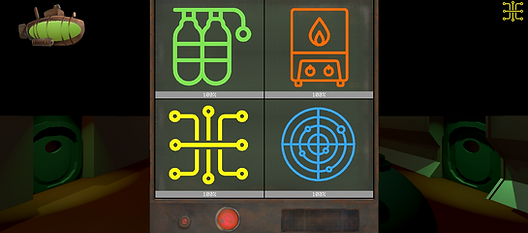
I wanted to explore the intimacy of repairing this failed submarine experienced by both parties. For a Captain, it is scary because the health of their vehicle decides their survival. For the submarine, it is a wounded creature leaving its fate in the hands of someone it cannot communicate with directly. For this reason, I suggested that Area 1 contain the most minigames. It would consist of the most "normal" gameplay that the player can expect from the pitch. Once the player is able to prove their competence to the ship is when they are allowed to proceed to Area 2. This would show the ship in a semi-organic state, as well as decrease the difficulty of the puzzles. Progressing beyond this to Area 3 would have a singular, simple puzzle that can repeat. The purpose was to show how the ship is lowering her defences, allowing the Captain access to the vulnerable parts of herself in hopes that they will be able to help her. The impersonal, easy mechanical fixes giving way to more complicated organic desires. The Captain would be both a cell in the body of the ship created to fix her, as well as taking on the role of a partner that the ship has opened herself up to.
Development Process
Writing
Due to the scope of the game, we decided to focus the narrative in two places; tutorial text and Captain's Logs. The tutorial text would be the ship's POV, with the Logs being left by previous iterations of the Captain. I utilised Whitney Beltran's dialogue format, applied from the workshop I attended at IGDC 2023. This formatting allowed us to keep easy track of the dialogue and swiftly implement any changes required.
The beginning of the tutorial is cold and informative, slowly breaking down into personal requests as the ship's health worsens and the Captain reaches closer to her heart. Similarly, the Captain's Logs start with very sparse detail and documenting their actions, becoming more articulate and conscious as the game progresses. As the ship reveals more of her nature to the previous Captain, they too gained a better understanding of the limited world, and thus left more clues for the next Captain in this chain.
Ultimately, the player can choose to endlessly feed the ship, or attempt to escape into the world beyond. Choosing the latter leads to the escape hatch, which ends up being the stomach of the ship. The cycle then begins anew, with the ship expressing grief over having lost another Captain. The end of the game has the ship take on an almost maternal role, wanting to create a new Captain who desires to be with her forever and help her along their journey.


What Went Right
-
I gained a better understanding of writing for horror
-
Was able to practice dialogue and tutorial writing along with essential feedback
-
Team was receptive to changes in scope and the new direction of the narrative
-
We were able to include many aspects of the initial concept into the final game while modifying it enough to make for a stronger narrative
What I Learnt
-
I was able to improve on my communication and feedback skills
-
I gained experience in tutorial and dialogue writing
-
I was able to work on a new genre compared to my previous work
-
I learned how to balance my time and multitask roles between two projects on an identical deadline
What Went Wrong
-
Remote working led to miscommunication
-
Game shipped with many bugs
-
Initial scope had to be cut down due to time constraints
How I Overcame It
-
I made sure to communicate with my team constantly through text and scheduled calls daily to connect and bring everyone onto the same page
-
I took initiative on playtesting the game on different devices and reported as many bugs as I could
-
I adapted as many aspects of the initial scope as possible, as well as making a concrete plan for the narrative design early on to ensure minimal wasted work